

Before we begin, I want to thank everyone who has been sending notes of encouragement and appreciation. Because of you, this newsletter placed as #79 among all Substacks in Education—thank you for your continued support and for sharing this work.

Since I started the Get to Know People and Places You Bomb series, I’ve also received many heartfelt comments and messages both from Iran and abroad. Today I want to address what a couple of messages asked:
Can you change the words “you bomb” to “US military bombs?” Most Americans are against the war, and this makes them feel accused. Especially since they’re not proud to be American at this moment.
I hear you. You didn’t choose this war. Just like my family and friends in Iran didn’t choose to be bombed. I’m American. My husband is American. Much of my family is born and raised in the US. So I want to make it clear that when I say “you,” I mean myself as well.
So why “you” and not “US military”?
Saying it’s “US military bombs,” not me, creates distance. It points at an institution somewhere out there, separate from us. And I’ve seen what that distance does—the same way some Americans say, “I didn’t enslave anyone. Why are you making me feel guilty?” and then walk away from any responsibility for slavery’s ongoing legacy and current racism in the US. This makes the conversation about the discomfort rather than the actual harm done. The distancing move protects feelings at the expense of accountability while stripping away any sense of agency to do something about it.
So I’m inviting us collectively to decenter our own feelings when lives elsewhere are literally being torn to shreds.
And no, it’s not because you are personally responsible for every military decision, but because you live in a country where your tax dollars, your vote, and your silence all play a role. This is fundamentally different from blaming Muslims, or people who look Muslim, Arab, or Middle Eastern, for 9/11. They had no vote in how they were treated then (or even now). They haven’t had the privilege of distancing themselves from it.
What I’m suggesting is that when we have the option to look away, to distance ourselves, and to tell ourselves it's not our problem, we shouldn't take it. We should see it for what it actually is: an opportunity to take responsibility and make real change.
Feeling guilty and despondent doesn’t help anyone. But building capacity to sit with discomfort for others builds it for ourselves too. This is something I've written about extensively and know to be true from years of working with refugees and underserved communities. Agency and action are the antidote to guilt and despair.
So here’s what you can do depending on your body budget while you continue to build capacity:
Check your retirement fund—make sure it’s not invested in weapons manufacturers.
Speak up—at events like high school graduations when recruiters are brought in to address the whole graduating class.
Show up to military recruitment sites with the truth—about trauma, veteran suicide rates, and how the US military is the world's largest single institutional producer of greenhouse gases, which has consequences for the whole planet.
It’s encouraging that a record number of service members are attempting to leave the US Military as conscientious objectors because they're being asked to target civilians in Iran. Learn about conscientious objector status and talk to the young people in your life about it.
And it’s important to point out that not all of it is on the military either. Many of your representatives are perfectly comfortable funding this war and funding genocide. They’re supposed to represent you. Hold them to account.
There is much more we all can do.
You didn’t start this war. But you’re paying for it. You might as well know what you’re paying for. Every little girl killed. Every hospital bombed. Every child made an orphan. Every ecosystem made uninhabitable. Every wedding turned to a funeral.
And then decide what you’re going to do about it.
That’s not an accusation. That’s an invitation.
Now onto Kuhestak:
The Bombing of the Wedding in Kuhestak, Iran
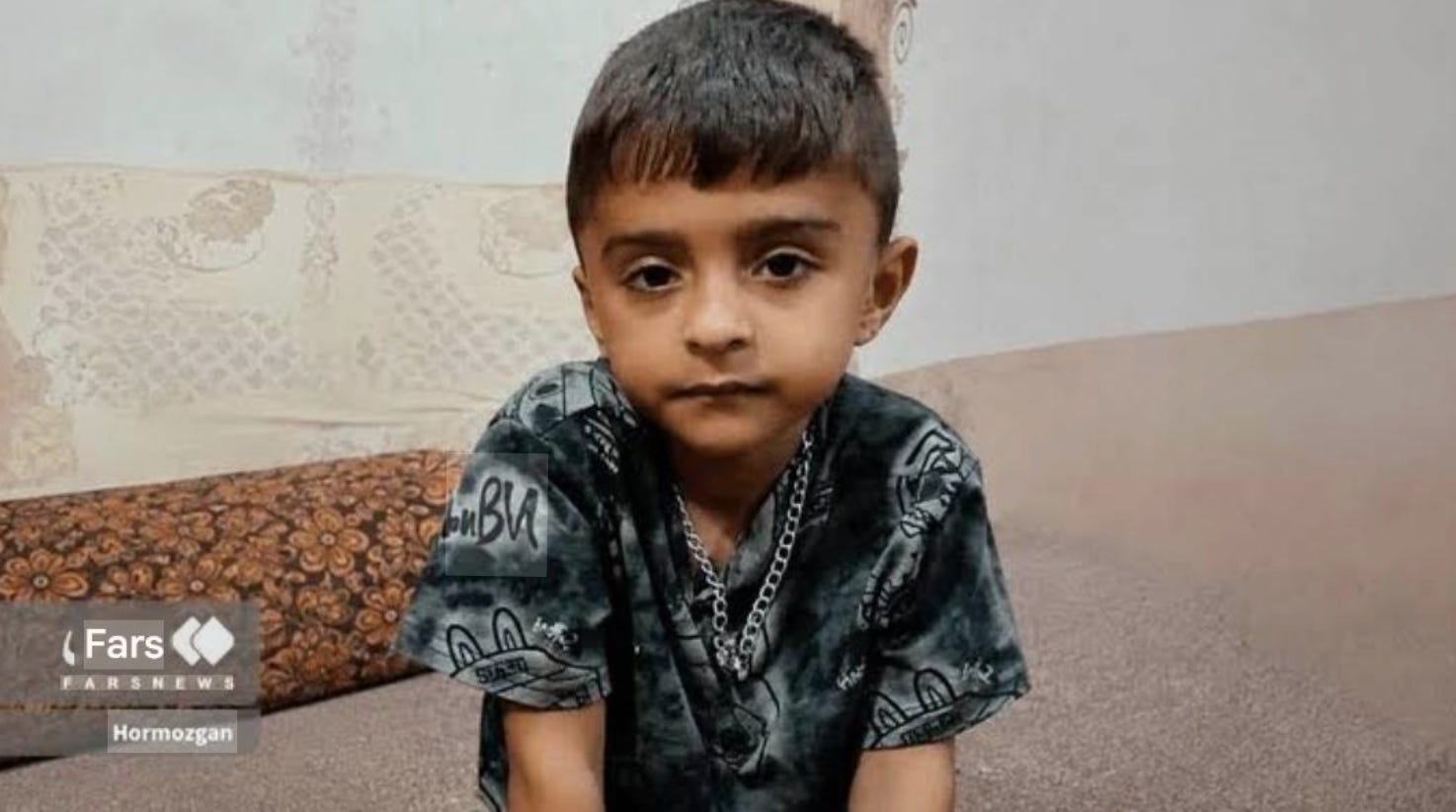
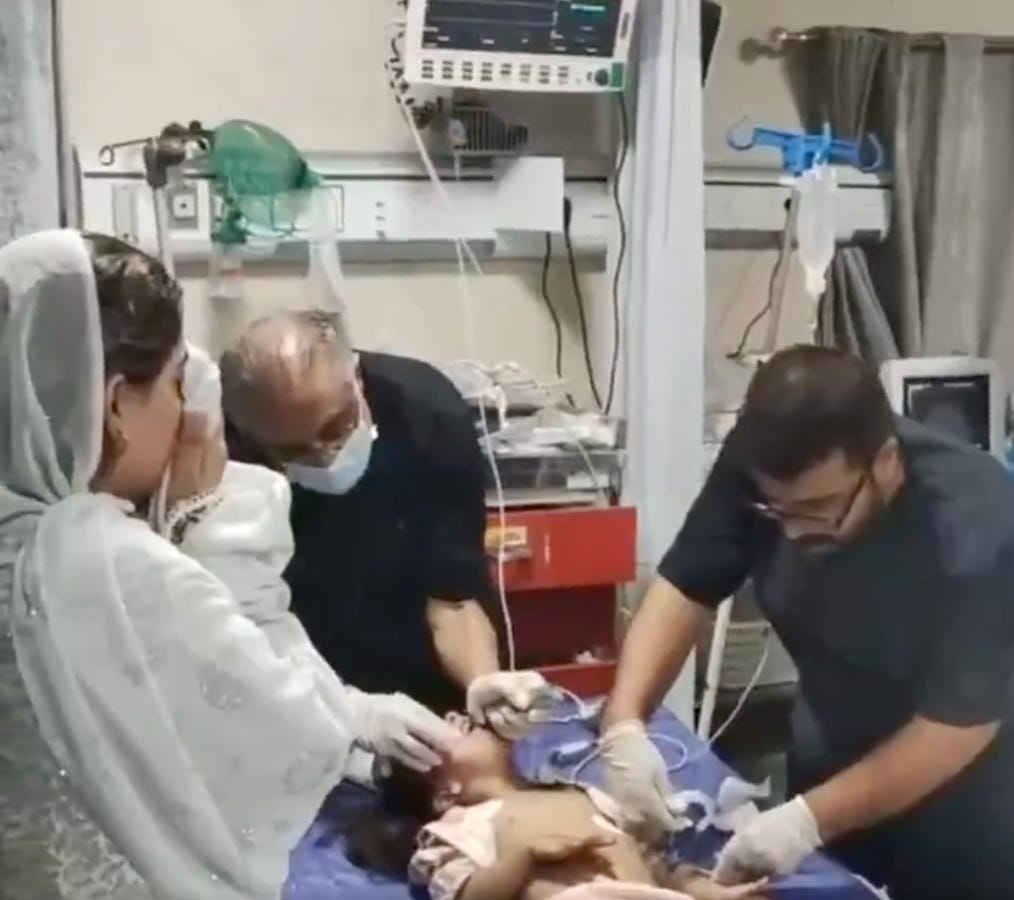
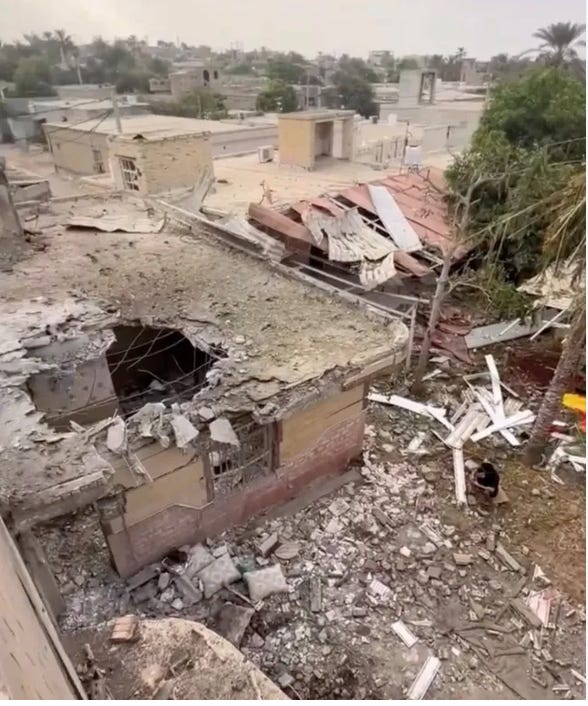
On the night of September 1, 2026, a US strike hit a residential home in Kuhestak, a small coastal city of approximately 3,500 people in Hormozgan Province in Sirik County, while a wedding was being celebrated inside.
At least 4 people were killed, including 2 children, and a fifth died at the hospital on Thursday. More than 68 others were wounded, 50 of them women and children.
Sirik is the same county where the US previously bombed the water supply, leaving 20,000 people without drinking water in 50°C heat. The people of this region have been bombed repeatedly with the help of our tax dollars.
Here are the names of the victims that have been published:
4-year-old Amir-Mohammad Karimi
Mohammad Malahi, 16 years old (the second child named Mohammad Malahi killed by the US—the first was 10-year-old Mohammad Taha Malahi, killed in the Minab school bombing)
43-year-old Kolsoum Malahi
50-year-old Zarkhatoon Taheri
Weapons imagery shows remnants of a JSOW, a Raytheon-made glide bomb that uses a combination of GPS and Inertial Navigation Systems (INS) to hit targets accurately from long distances. Raytheon’s stock, by the way, has risen 117% in the past five years.
This is not the first time the US has turned a wedding into a funeral. The US has bombed at least 9 weddings since 2001—6 in Afghanistan alone. Here are the most documented before Kuhestak:
Afghanistan, 2002—Uruzgan wedding bombing: US airstrike killed 54 at a wedding celebration
Iraq, 2004—Mukaradeeb wedding massacre: 42 killed, including 11 women & 14 children. The US denied it was a wedding. Generals refused to apologize
Afghanistan, 2008—Haska Meyna airstrike: 47 killed, mostly women and children
Yemen, 2013—Rad`a wedding: 12 killed, more injured, including the bride. The US never officially acknowledged it.
We should all do what we can to stop these war crimes.
A Snapshot of Human & Economic Rights in Iran
Unfortunately with so much emphasis on the US war on Iran (and rightfully so), we’re seeing very little coverage on the human rights situation in the country: the plight of political prisoners, minorities, those who pray differently, and those on death row.
In recent weeks, many Baha'i citizens have been arrested and imprisoned, their homes and businesses raided, and personal and professional property confiscated. Some have received lengthy prison sentences and social restrictions.
Here’s what journalist Siyâvash Shahabi says on Facebook about the economic pressure Iranians are currently grappling with: “Half of Iran’s population owns only 3.9 percent of the country’s total wealth, while the richest 10 percent owns 63.1 percent, and the richest 1 percent alone holds around 29 percent.
The issue isn’t simply that ‘the country has become poor’ or that ‘war and sanctions have made everyone poor.’ The wealth is there. But the cost of the crisis gets pushed downward, while those at the top still have room to protect and expand their consumption and assets.
For the fisherman whose boat has burned, the government is still assessing the damage and working on a plan. For someone who can afford a luxury car, the import route is already open.”
Liberation for all means that we stand with all those suffering injustice—whether oppressed, sanctioned, bombed, or bearing the aftermath. And regardless of who they are or who is inflicting the harm.
A Moment to Replenish
Before you close this tab, let’s take 60 seconds.
Place one hand on your chest. Feel your heartbeat. Take some slow breaths—in through the nose, out through the mouth. Let your shoulders drop. Thank your heart for the miracle of keeping you alive. For staying open. For staying kind amid the harshness.
Let's remember to do a version of this as often as we can. Before and after tasks, between difficult news cycles, and whenever we need to come back to ourselves. This is how we build capacity: through tiny practices, done joyfully and with ease. This is the kind of micro-replenishment practice I explore in my Resilience through Joy work. Because a nourished nervous system is an act of resistance✨
And yet I recently saw a video of people dancing in the streets there - because sitting at home and crying is not going to change anything either! 😍
❤️🤍💚